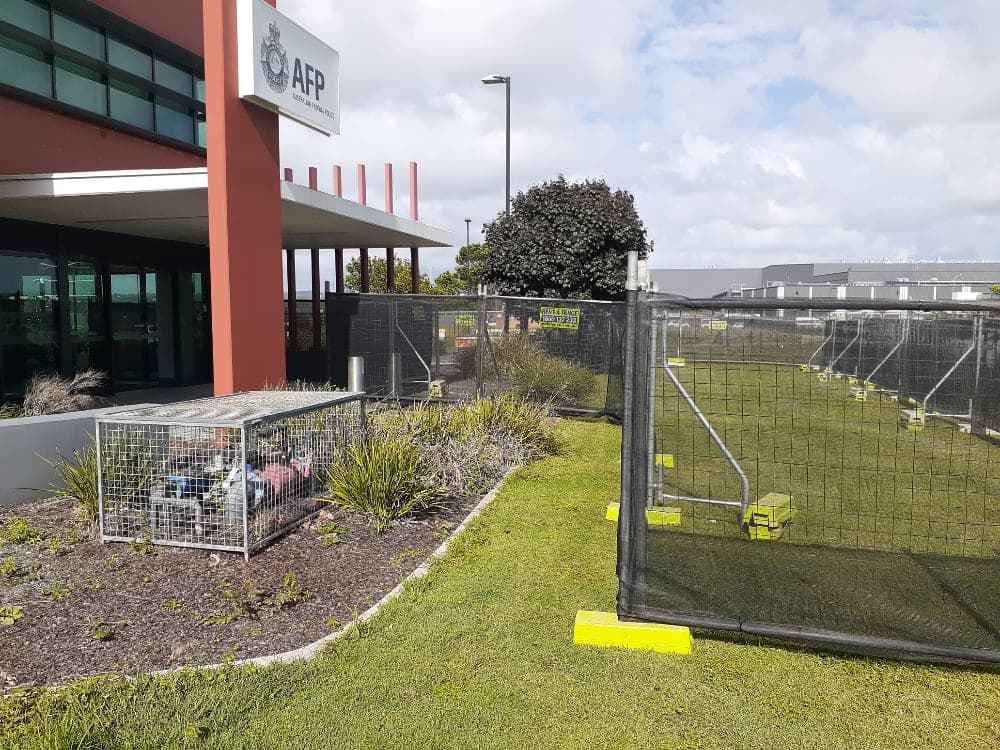
AS 4687 appears in tender documents, site specifications and hire contracts as three characters and a number, usually with the word "compliant" attached. What it actually contains is more useful than the citation suggests, because it explains why temporary fencing is built the way it is, and why some cheap fencing fails the way it does.
What the standard is
AS 4687 is the Australian Standard for temporary fencing and hoardings. It addresses the equipment itself: construction, dimensions, foundations and supports, and structural performance. In plain terms, it describes what a temporary fence must be able to withstand while standing where the public might meet it.
The heart of it: stability
The load case that drives temporary fence design is wind. A fence panel is a large, light surface held up by feet that sit on the ground, and the standard's structural requirements are substantially about that geometry: the assembled system, panel, coupler, foot and any bracing, resisting wind actions without overturning.
Three practical consequences fall out of this:
- The system is rated, not the panel. A compliant panel in a cracked foot with no coupler is not a compliant fence. Assembly quality is part of structural performance, which is why professional installation is part of how Rentafence delivers fencing rather than an optional extra.
- Anything attached changes the load. Shade cloth, banner mesh and acoustic panels turn a permeable panel into a sail. The standard's wind logic is exactly why sheeted runs need bracing and ballast specified with the sheeting.
- Condition is compliance. A bent frame or a fatigued weld changes the numbers. Fleet inspection and repair, the unglamorous half of a hire company's job, is what keeps a fence the thing the standard describes.
What the standard does not do
AS 4687 governs the product. It does not decide how much fence a site needs, where gates belong, whether a council permit applies, or what happens around a pool. Those live in WHS duties, local government requirements and, for pools, AS 1926.1 respectively. The wider legal stack is mapped in our state by state rules guide.
A specification that says "fencing to AS 4687" has specified the equipment. Someone still has to design the perimeter.
What compliance evidence looks like
When a principal contractor or certifier asks for evidence, they generally want two things: documentation that the supplied equipment meets the standard, and confidence that the installed run reflects it, bracing where the design needs it, feet and couplers in place, condition acceptable.
Rentafence manufactures its fencing in Australia at the company's Brisbane facility, which is what makes both halves straightforward: the specification is owned in house, and the ISO 9001:2015 certified quality system keeps the documentation current. If your tender needs the paperwork, ask us.
The buyer's takeaway
The standard is why the cheapest fence on the market is sometimes expensive. Panels that look identical in a photo differ in wire gauge, weld quality, foot design and frame section, and the differences only show up in the wind. Hiring from a manufacturer means the fence on your site is the fence the documentation describes.
Request a quote for a compliant perimeter, or start with the temporary fencing FAQ.