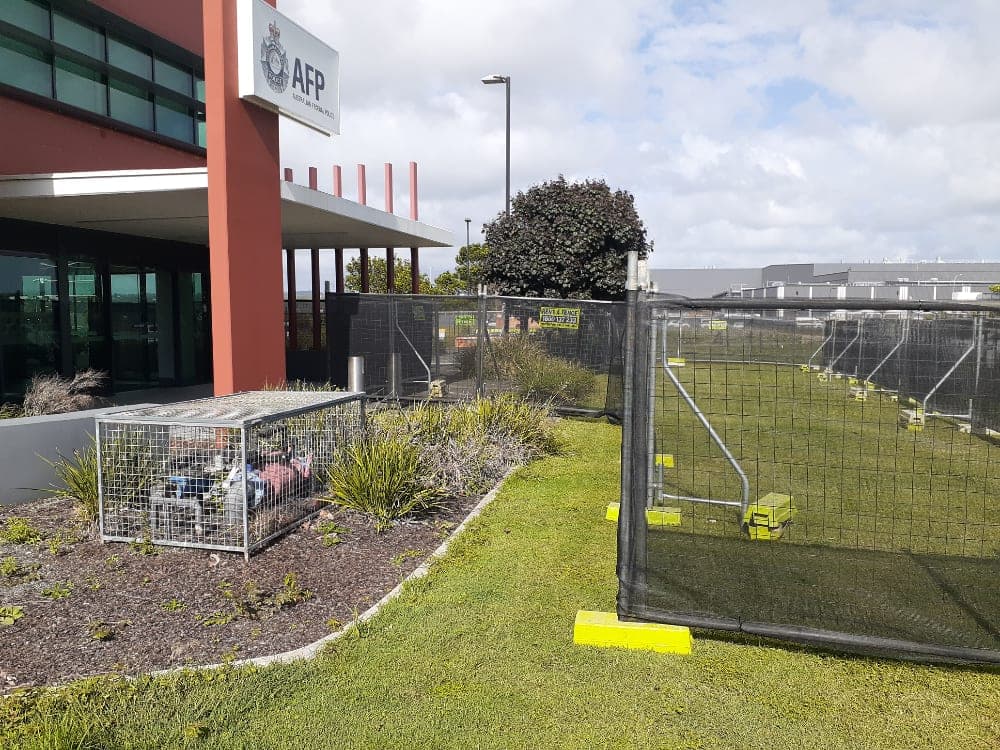
New South Wales treats pool barriers with a seriousness no other state quite matches: a public register, certification tied to property sales and leases, and inspection regimes with real teeth. For homeowners, the part that catches people out is the gap, the weeks or months during a pool build, a landscaping project or a barrier repair when the permanent fence is not there. The legal obligation does not pause for construction. A temporary compliant barrier is how the gap gets closed.
The legal frame, briefly
The Swimming Pools Act 1992 requires pools in NSW to be surrounded by a compliant barrier at all times, registered on the NSW Swimming Pool Register. Certificates of compliance are required when a property with a pool is sold or leased. The barrier itself is measured against AS 1926.1, the pool barrier standard.
The phrase that matters is at all times. A pool that can hold water is a pool, whether or not the landscaping is finished. The practical trigger comes early in a build: once the shell holds rain, the site needs a compliant barrier.
What AS 1926.1 actually requires
The standard is specific because the risk is specific: a small child reaching water unwatched.
- Height: the barrier must meet minimum height measured from the outside ground level
- Gaps: controlled at the bottom, between uprights, and anywhere a child could pass
- The non climbable zone: a clear arc around the barrier free of footholds, pot plants, ledges, stacked pavers, the barbecue
- Gates: self closing and self latching from any position, opening outward away from the pool, latch at the prescribed height out of a child's reach
Why your builder's site fence does not qualify
Ordinary construction mesh is designed to keep adults off a work site, not children away from water. The apertures are climbable, the height and gap geometry are wrong, and a standard self closing personnel gate is not a pool gate. Using site mesh around a pool is the most common way a NSW property fails an inspection during works.
The compliant equipment is a dedicated line: pool panels with a vertical bar profile that offers no foothold, paired with the temporary pool gate, self closing, self latching, child resistant. They hire as a pair; a compliant fence with a non compliant gate fails as a system.
The scenarios that need it
- New pool construction, from the moment the shell can hold water until the permanent barrier is certified
- Renovation and landscaping, where decking, paving or retaining work takes a permanent barrier down
- Failed inspections, keeping the property compliant while the permanent fix is arranged
- Sale or lease preparation, closing the compliance gap so the transaction can proceed
The detail that fails inspections: the zone, not the fence
A perfect barrier with a wheelie bin beside it is a ladder. During works this is a daily hazard, because materials get stacked wherever there is room, and the non climbable zone silently fills with footholds. Whoever runs the site needs to own keeping that arc clear for the whole hire.
Getting a temporary pool barrier in place
Tell us the pool dimensions and access needs, and the barrier is quoted, delivered and installed as a compliant system. Request a quote or get in touch.
Wider context in the state by state fencing rules guide, and general site fencing in the hire FAQ. This article is general information; the NSW legislation and your local council are the authorities.