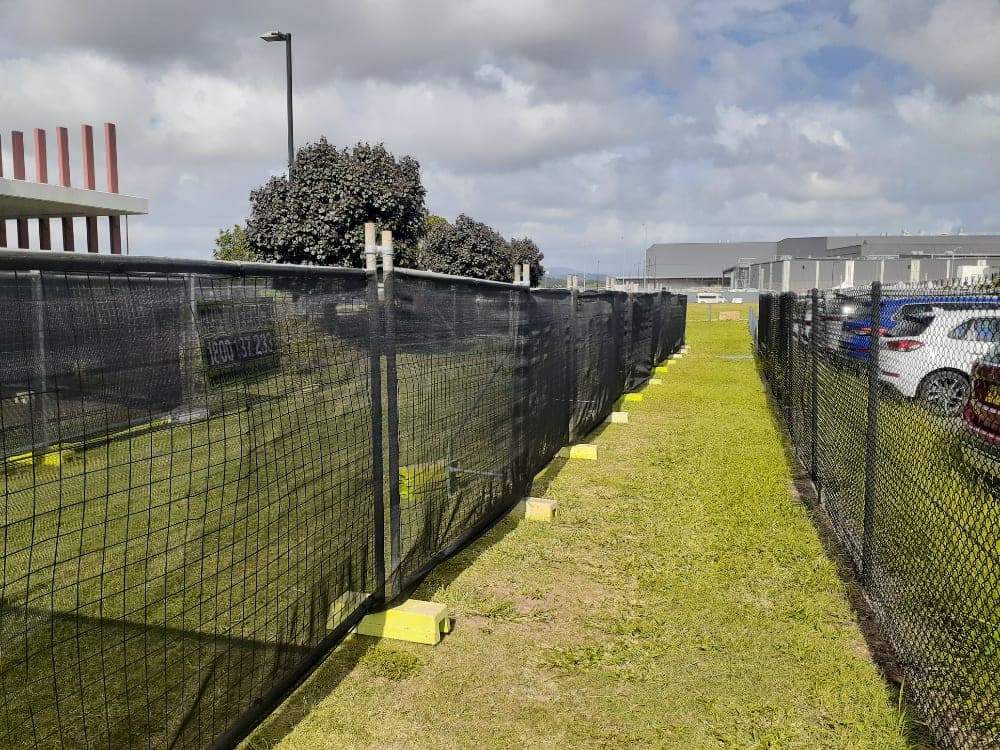
Walk any well run construction site and you will usually find not one fence but several, each solving a different problem. These are the five families that cover Australian construction, and the jobs each one owns.
1. Mesh panel fencing: the default perimeter
The workhorse. Welded mesh panels in concrete filled feet, coupled into continuous runs, engineered as a system under AS 4687. Mesh earns the default position because it does the most jobs adequately: it defines the boundary, resists casual entry, lets supervisors and neighbours see through it, and takes banner mesh when the project wants screening or signage.
Aperture is the specification decision. Tighter 25mm mesh denies footholds and suits security conscious boundaries; 40mm favours airflow and economy on low risk stretches.
2. Hoarding: the solid face
Hoarding panels trade transparency for authority. A solid face blocks sightlines, which removes the window shopping that precedes site theft, contains dust and debris at the boundary, and presents a clean frontage on retail streets where the project's neighbours are trading through the build.
The cost of solidity is wind load: a hoarding run carries far more sail than mesh and is braced accordingly. Variants like dog proofing close the ground gap where animals or debris migration are the concern.
3. High security fencing: the hard boundary
Where the standard 1.8m mesh height is an invitation rather than a deterrent, plant compounds, fuel storage, long shutdown periods, security fencing at 2400mm raises the commitment required to cross it. Paired with site cameras at the choke points, it converts the after hours site from easy target to poor risk. The wider security logic is in construction site security cameras.
4. Silt fence: the environmental line
The fence family that protects something other than people. Silt fence is the sediment control barrier that keeps disturbed soil out of drains and waterways, and on most projects it is a condition of the development approval rather than an option. It runs along the low side of disturbed ground, and unlike the other four families, its performance is about installation depth and fabric condition rather than height.
5. Specialist barriers: the specific answers
The tail of the range exists because some boundaries have non negotiable requirements:
- Pool panels and the pool gate, the only compliant answer where water sits inside the site, explained in pool fencing compliance
- Koala fencing for fauna exclusion conditions on approvals
- Noise reduction barriers for residential interfaces
- Water filled barriers where the boundary faces vehicles rather than pedestrians, covered in water barriers and traffic equipment
Specifying the mix
The efficient path is a boundary walk: assign each stretch its exposure, and the product list writes itself. Send the site plan with a quote request, or get in touch and we will walk it with you.