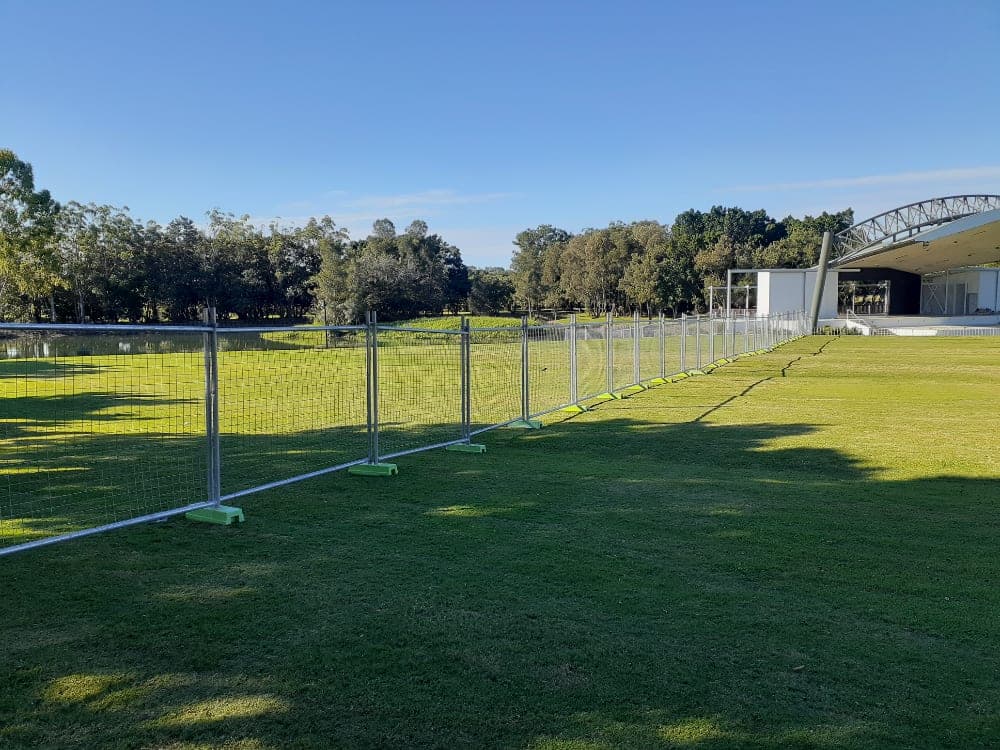
Here is an unfashionable claim: the most sustainable thing about a well run event is usually its hire contract. Not the bamboo cutlery, not the offset certificates, the fact that the fencing, barriers and toilets have already served hundreds of events and will serve hundreds more. Reuse at industrial scale is what a hire fleet is.
The fleet argument, honestly
A hired fence panel cycles through events and sites for years, gets repaired at the Rentafence Brisbane facility when damaged, and returns to circulation. Its embodied steel amortises across every hire. Compare the alternative economy: purchased once, used twice, rusted in a yard, landfilled. Multiply by every barrier, toilet and ticket office an event needs, and hire versus disposable is the biggest environmental lever an organiser holds. The hire versus buy economics tell the same story in dollars.
The practical corollary: design signage for reuse. Undated banner mesh, event name without the year, survives to next season; this year's dated version is single use printing on a reusable substrate.
Waste: win at the bin, or not at all
Event recycling is decided in the two seconds an attendee stands in front of a bin. The setup either makes the right choice effortless or the stream contaminates and everything goes to landfill anyway:
- Every recycling bin stands beside a general bin, no exceptions
- Pictorial signage, consistent across the site
- Bins where consumption happens and where flows exit
- Back of house gets its own skips for the clean commercial streams, cardboard, glass, containers
- Vendor rules match the streams that actually exist, compostables without a compost stream are theatre
Bin sizing lives in the industrial waste bin guide.
Water: infrastructure beats bottles
Refill culture is real and attendees respond to it, when the infrastructure exists and is advertised in advance. Hydration stations, bubblers and bulk supply, fed by event water services on unserviced ground, remove the single most visible waste stream a summer event produces. As a bonus, free water elsewhere shortens the bar queue.
Transport and power, the big honest numbers
Attendee travel and generator fuel dwarf everything above on most events' real footprint. The levers are planning levers: public transport promotion baked into ticketing, shuttle economics, generators sized to load rather than to fear. An event that measures one number a year, waste diverted, refills poured, transport split, and publishes it, beats a page of green adjectives.
Fold it into the booking
Paired bins, refill points on the site plan, reusable signage in the print run: sustainability rides the main infrastructure order when it is asked for early. Request a quote that includes it, or get in touch. The rest of the planning method is in the 11 step guide.