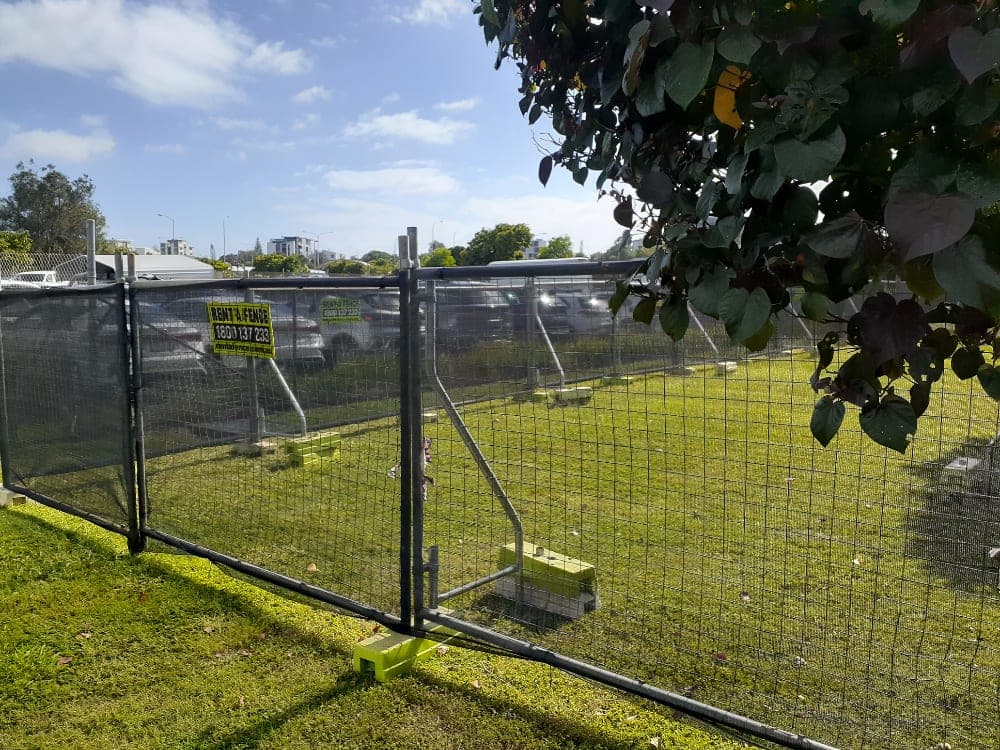
Here is the paradox of community construction: the smaller the project, the harder the fencing brief. A tower builder fences one boundary and works behind it for two years. A playground upgrade fences a moving work area inside a park full of children, dogs and pram traffic, none of whom stop coming, and answers to a council whose complaints line is also its funding line.
The public never leaves
Community projects, playground renewals, hall renovations, sports facility upgrades, streetscapes, share one condition: the site sits inside a space the public keeps using. Four consequences follow.
Children treat everything as equipment. Whatever can be climbed will be, so mesh selection, height and the absence of footholds matter more beside a swing set than beside a warehouse. Gates need to close themselves: self closing personnel gates remove the human factor a propped gate represents.
Desire lines rule. People walk where they have always walked. A diversion that adds three minutes gets ignored, through the fence gap if necessary. The pedestrian route around the works must be genuinely convenient, continuous, pram and wheelchair passable, and lit, or it is decoration.
The neighbours are the client. On council work, every complaint lands on the project's owner. Noise barriers on residential edges, screened fencing carrying project information, and a tidy boundary are cheap insurance against the meeting that pauses the job. The quieter worksites guide covers the acoustics.
The environment is usually a condition. Parks drain to creeks, so silt fence is standard; fauna conditions appear in approvals, and koala exclusion fencing answers them where they do.
The standard community kit
- Mesh perimeter around the work area, sized via the calculator
- Self closing gates at crew access points
- Water barriers wherever works touch the car park or road, per the seen versus stop rule
- Banner mesh with the council's project story, which doubles as screening
- Silt fence on the drainage side
- A toilet for the crew, placed away from public areas
- And if any water feature or pool sits inside the boundary: pool rated barriers, never site mesh, per pool compliance
One paradox worth naming
Community projects often assume the rules soften because the work is public spirited. They tighten. Public land means every requirement, permits, pedestrian management, insurance evidence, runs through the project conditions with an audit behind it, and the state and council rules apply in full.
Scoping one
A marked up aerial photo and the works schedule are enough to start. Request a quote or get in touch, Rentafence's own community involvement means this category is home ground.